If you get your health coverage through Michigan Medicaid, you may have already gotten a notice in the mail about changes coming in 2027. Notices are going out now, and more are coming.
We’re a dental office, not a benefits agency, so we won’t pretend to tell you whether you personally will qualify. What we can do is lay out what’s changing in plain language, explain how it connects to your dental coverage specifically, and point you toward the people who can actually answer eligibility questions.

What’s changing on January 1, 2027?
Two things, and they’re separate.
First, some adults on the Healthy Michigan Plan will need to show they’re working or doing another approved activity to keep their coverage. Second, eligibility renewals for the Healthy Michigan Plan move from once a year to every six months.
Both changes come out of the federal law passed in July 2025 and apply across states, not just Michigan. The state has said many people already meet the work rule without doing anything differently, and others will be exempt.
Does this affect my dental coverage?
Yes, indirectly, and that’s the part people miss. Your dental benefits come through your health plan. Michigan Medicaid health plans provide dental coverage to Healthy Michigan Plan enrollees and to Medicaid enrollees who are 21 and older.
So if your health coverage lapses, your dental coverage lapses with it. There’s no separate dental card that keeps working on its own.
Children are handled differently. Kids under 21 on Medicaid are enrolled in Healthy Kids Dental, and the work requirement rules apply to adults ages 19 to 64, not to children.
Who actually has to meet the work rule?
It applies to some adults ages 19 to 64 enrolled in the Healthy Michigan Plan. It does not apply to everyone on Medicaid, and it doesn’t apply to traditional Medicaid categories the same way.
The state has listed several exemptions. You may not need to meet the work rule if you:
- Are under 19 or over 64
- Are pregnant, or gave birth within the last 12 months
- Are a parent or caregiver for a child or family member
- Have a disability or a serious health condition
- Receive SSI or Social Security Disability
- Are facing a short-term hardship, such as a hospital stay, a disaster in your area, or high unemployment where you live
MDHHS has said it will use information it already has on file to identify many of these exemptions automatically, so a lot of people won’t need to do anything extra. If the state needs more from you, it will reach out through MI Bridges or by mail.

What counts as a qualifying activity?
The requirement is 80 hours a month, and more counts toward it than most people assume. Approved activities include working a job, going to school, job training programs, internships, volunteer service, community service, high school or GED programs, and college or vocational education. Substance use treatment and recovery programs also count.
You can also combine activities to reach the 80 hours. Twenty hours a week at a job gets you there on its own, but so does a mix of part-time work and classes.
When do I actually need to do something?
The rules take effect January 1, 2027, but nobody’s renewal happens on that date. Renewals are staggered.
For people who already have Healthy Michigan Plan coverage, work rules get reviewed at renewals happening on or after March 1, 2027. The first group up for renewal has to get their paperwork in by March 31, 2027, and that same group is also the first to move onto the six-month renewal schedule.
If you apply for coverage on or after January 1, 2027, the application itself will include questions that check whether the work rules apply to you.
One detail worth knowing: through 2027, the state generally has to accept your own statement that you’re meeting the requirement or that you qualify for an exemption, in cases where it can’t verify on its own. Starting January 1, 2028, documentation requirements tighten.
What happens if coverage lapses?
A few things change at once, and they’re worth understanding before you’re in the middle of it.
Retroactive coverage is shrinking. Michigan Medicaid used to cover some services received up to three months before you applied. Under the new rules, Healthy Michigan Plan members can get coverage for up to one month before applying, and other Medicaid enrollees up to two months. If you get care while uncovered and apply afterward, more of that bill may land on you.
Emergency-only coverage is also narrower than it sounds. It excludes routine visits, preventive care, ongoing treatment for chronic conditions, most prescriptions, and non-emergency procedures. For dental, that means cleanings, exams, fillings, and planned work like dentures would generally fall outside it.
Coverage also isn’t permanently lost. If your coverage ends, you can get it back by meeting the work requirement or qualifying for an exemption in a future period.
What’s the smartest thing to do right now?
Three things, in order of how much they matter.
Make sure the state can reach you. Log into MI Bridges and check that your address, phone number, and preferred contact method are current. A significant share of the projected coverage losses come from paperwork never reaching people or never getting returned, not from anyone actually being ineligible. The Whitmer administration has estimated that up to 200,000 Michigan residents could lose coverage under the new requirements, including some who are eligible but don’t submit all the necessary documentation.
Open the mail and respond by the date on the letter. Notices from MDHHS have deadlines attached. Responding on time is the single highest-leverage thing you can do.
Take care of dental work you’ve been putting off. If you’ve got a tooth that’s been bothering you, a filling you’ve been delaying, or you’ve been thinking about dentures, getting it handled while your coverage is active removes the uncertainty from the equation. This isn’t a scare tactic and there’s no deadline we’re inventing. It’s just easier to do it now than to redo the math later.
Where to get real answers about your eligibility
We can’t tell you whether you’ll qualify, and neither can any dental office. For questions about your own case, go to the source:
- MDHHS, through MI Bridges or by calling the number on your notice
- Your health plan’s member services line, listed on your insurance card
- Michigan ENROLLS, for questions about enrollment or switching plans, at 1-800-975-7630
The state has also published a plain-language page on the new Healthy Michigan Plan work requirements that’s worth reading directly rather than relying on secondhand summaries.\
Where we fit in
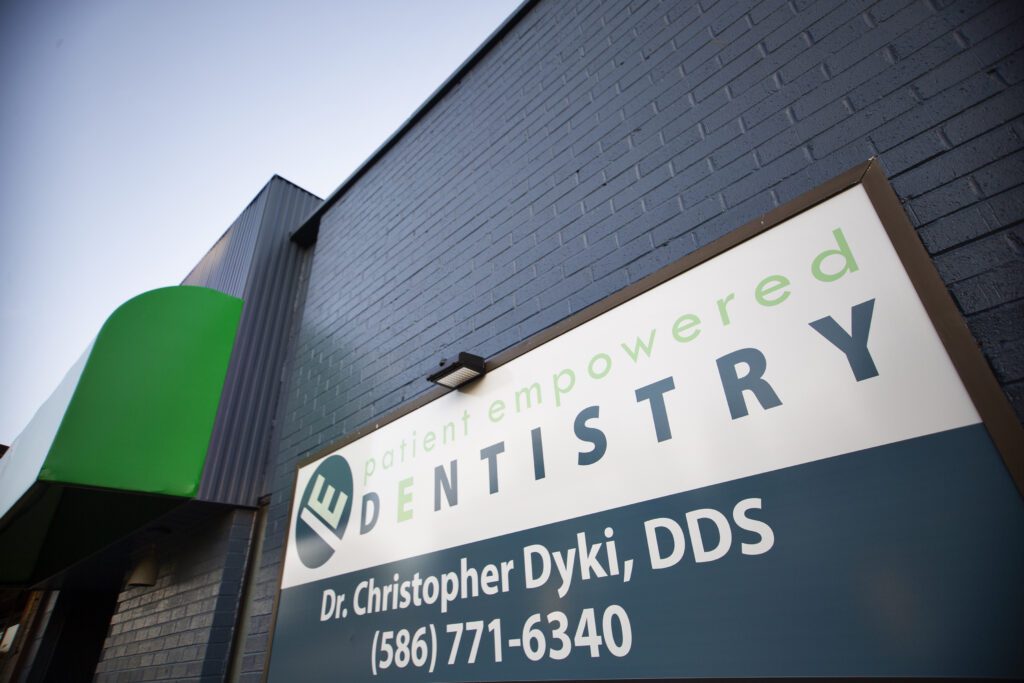
Patient Empowered Dentistry has served Eastpointe since 2009. We’re a veteran-owned practice, and Dr. Dyki is a member of both the American Dental Association and the Michigan Dental Association. We work with Medicaid-managed plans every day, including DentaQuest, Molina Healthcare, Aetna Better Health, and Delta Dental’s Medicaid EPO network.
That daily experience is the reason we’re writing this at all. We see what happens when coverage lapses partway through a treatment plan, and we’d rather you hear about it now than find out from Deb at the front desk.
We do root canals, extractions, dentures, and immediate dentures here in our Eastpointe office rather than sending you down a referral list, which matters more than usual for patients whose coverage makes specialty care hard to find. If your situation changes, we’ll talk through your options honestly, including what things cost without insurance.
You can read more about finding care when offices won’t take your plan, or about how Meridian dental coverage works now if that’s your plan.
Ready to schedule?
If you want to get something taken care of while your coverage is settled, give our Eastpointe office a call. We’ll verify your benefits before your visit so you know exactly where you stand.